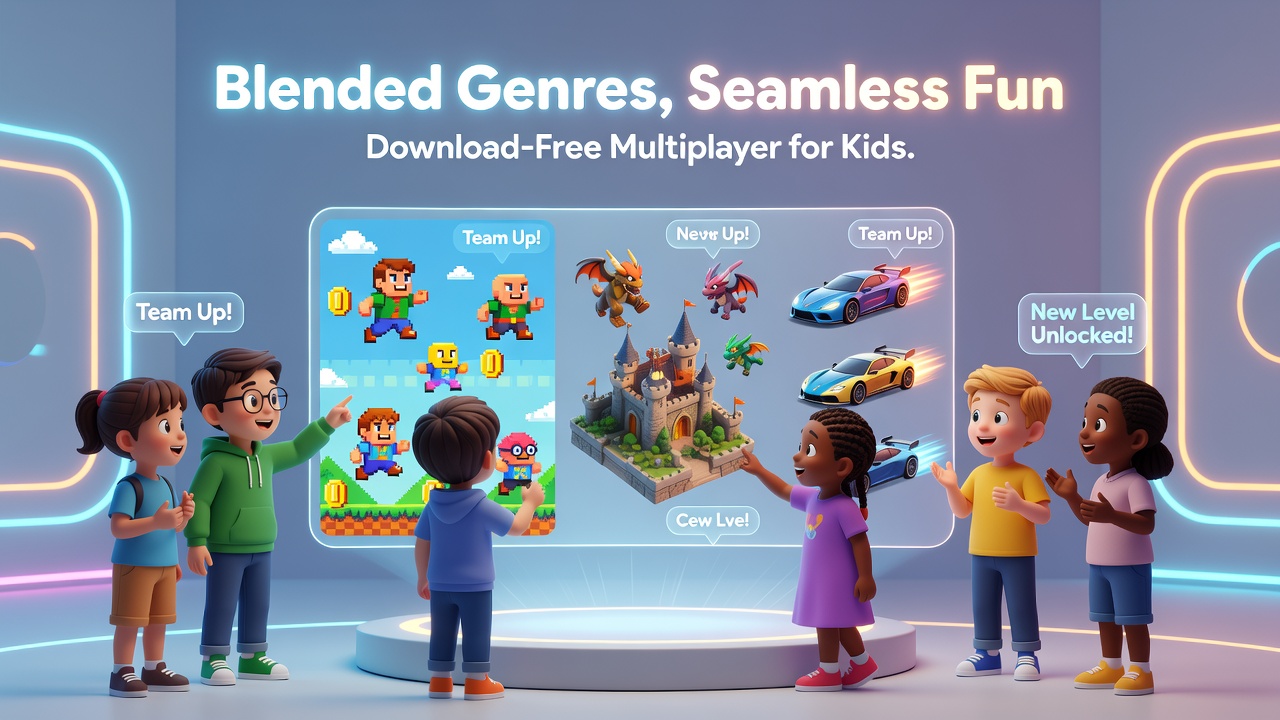
Social Patterns in Genre-Mixed Free Browser Multiplayer Games for Young Players
Blended game genres in download-free multiplayer browser environments create distinct social patterns among children as action sequences intersect with puzzle solving and strategic planning during group sessions. Researchers tracking these platforms note that players often form temporary alliances where quick reflexes support longer-term tactical decisions, and communication flows through built-in chat systems or shared visual cues rather than external voice tools. Data from platform analytics shows participation rates climbing steadily through 2025, with June 2026 figures indicating further growth in sessions lasting beyond fifteen minutes as hybrid mechanics encourage repeated returns.
Mechanics Driving Interaction
Action elements require immediate responses while puzzle layers demand coordinated observation and strategy phases call for collective resource allocation, and children navigate these shifts by dividing roles within small groups. Observers note that one player might handle timing-based challenges while others map out sequences, leading to fluid exchanges of leadership that emerge without formal assignment. Studies conducted by European research institutes reveal that such role fluidity appears more frequently in browser titles than in single-genre environments because the genre crossover forces constant adaptation.
Turn-based strategy segments embedded inside real-time action windows prompt players to pause and negotiate next moves, which builds micro-cultures of suggestion and agreement visible in chat logs. Figures released by the Australian eSafety Commissioner indicate that moderation tools integrated into these free platforms reduce disruptive exchanges by approximately forty percent compared with unmoderated spaces, allowing cooperative patterns to surface more consistently.
Communication Channels and Group Formation
Browser-based systems limit external add-ons so all interaction occurs through in-game text, emoji reactions, and synchronized cursor movements that function as nonverbal signals. Those who have examined session recordings find that children develop shorthand phrases and visual conventions within the first few rounds, accelerating group cohesion as the session progresses. Puzzle elements particularly reward precise description of spatial relationships, while action phases reward concise warnings, creating complementary communication demands that strengthen overall team performance.
Small clusters of three to five players tend to stabilize after initial matchmaking rounds, with newcomers integrated through observation rather than direct invitation. Research from Canadian academic centers shows these clusters exhibit higher retention when genre blends include both competitive scoring and cooperative win conditions, because success depends on balanced contributions rather than individual dominance.
Observed Behavioral Shifts Over Time
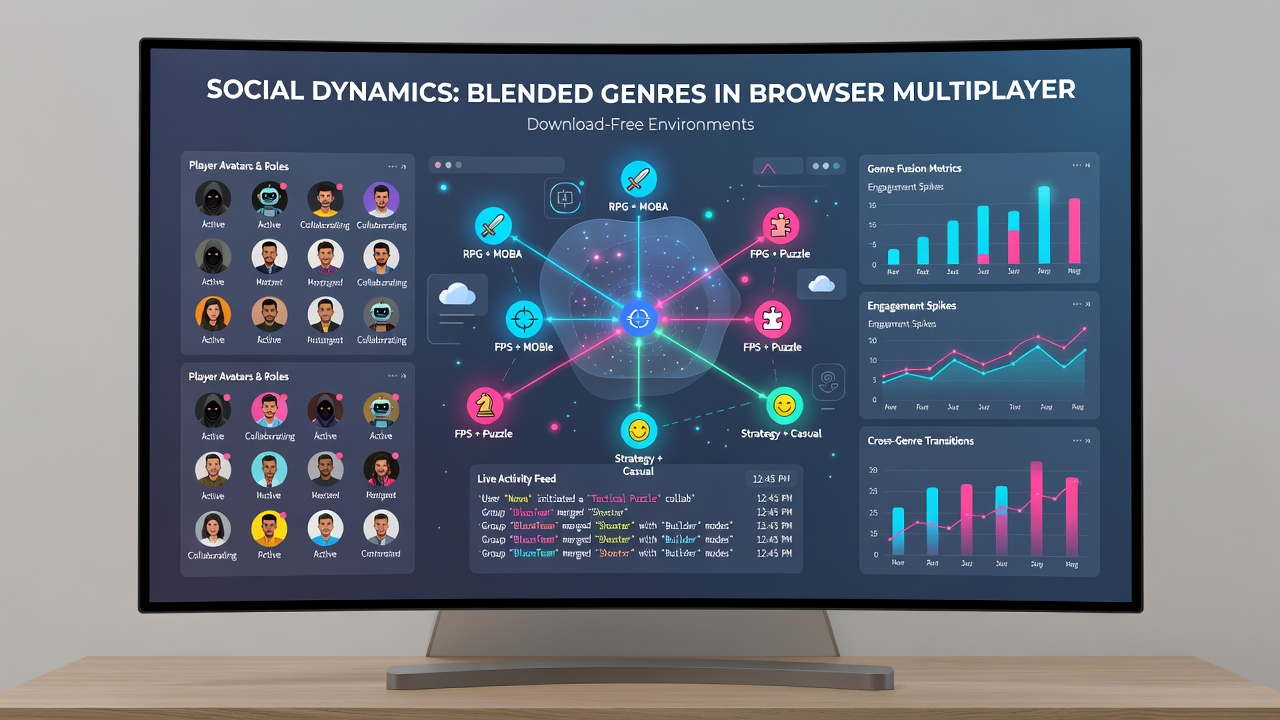
Longitudinal data collected through June 2026 demonstrates that repeated exposure to genre-fused environments correlates with increased frequency of helping behaviors outside active gameplay moments, such as offering tips between rounds or explaining mechanics to newer participants. Strategy layers embedded within fast-paced sequences appear to extend the window for such exchanges because players naturally slow down during planning phases. Industry reports from the Interactive Games and Entertainment Association document similar trends across multiple regions, noting that browser accessibility removes hardware barriers and broadens the demographic range participating in these interactions.
Conflict resolution patterns also evolve as children encounter mismatched pacing between action and puzzle components. Quick adaptation to the slower tempo of strategic segments reduces frustration, while successful resolution of timing conflicts reinforces group trust. Analysts tracking moderation logs report that disputes decrease measurably once players establish shared terminology for describing hybrid challenges.
Platform Design Influences
Design choices such as visible progress indicators shared across all participants and simultaneous objective updates keep everyone aligned on collective goals. These features reduce ambiguity during transitions between genres, allowing social energy to focus on coordination rather than clarification. Government monitoring bodies in the Asia-Pacific region have noted that transparent rule explanations embedded directly in browser interfaces further support inclusive participation by minimizing knowledge gaps between experienced and novice users.
Matchmaking algorithms that prioritize mixed-experience groups accelerate the spread of learned behaviors, as veteran players demonstrate effective strategies through action rather than lengthy explanations. Retention metrics compiled by academic consortia indicate that platforms employing such algorithms sustain higher daily active user counts among the target age range throughout 2026.
Conclusion
Blended genres within download-free browser multiplayer environments generate measurable social dynamics centered on role flexibility, shorthand communication, and cooperative problem solving. Continued observation through mid-2026 suggests these patterns remain stable as long as platform features continue to reward balanced contributions across action, puzzle, and strategy components. External sources such as Australian eSafety resources and reports from the Interactive Games and Entertainment Association provide ongoing data supporting these observations across different geographic markets.