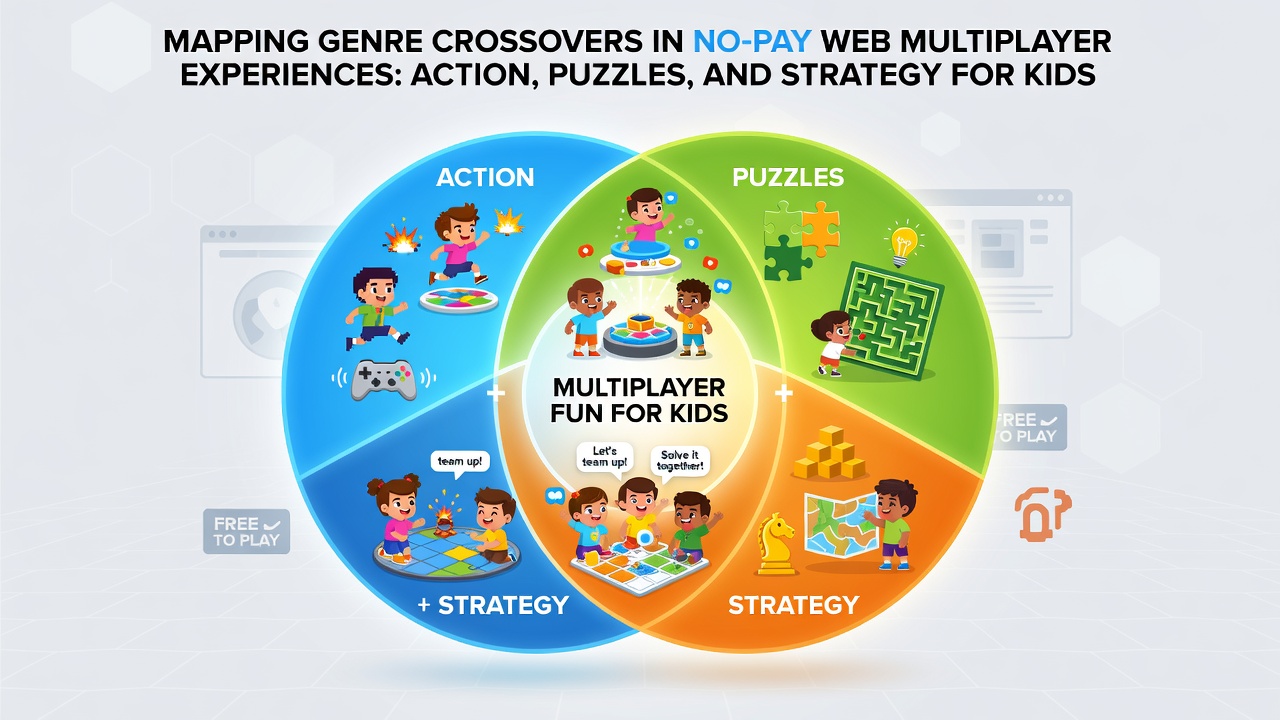
Mapping Genre Crossovers in No-Pay Web Multiplayer Experiences: Action, Puzzles, and Strategy for Kids
Free web-based multiplayer platforms continue to evolve as spaces where action sequences merge with puzzle mechanics and strategic planning in titles designed specifically for younger audiences, and observers note that these blends appear across browser environments that require no payment or downloads. Data from industry reports shows participation rates among children aged 8 to 12 rising steadily through early 2026, while developers integrate real-time movement challenges alongside logic tasks and resource management systems that unfold in shared sessions.
Core Components of Each Genre in Browser Settings
Action elements typically involve timed navigation, obstacle avoidance, and coordinated movement between multiple players in shared virtual spaces, whereas puzzle layers introduce pattern recognition, spatial arrangement, and sequential problem resolution that players tackle together. Strategy components add layers of planning such as territory allocation, turn-based decisions, and collective goal setting that influence outcomes across rounds. Research indicates these elements coexist without requiring separate game modes because browser technologies support simultaneous input handling and state synchronization across connected devices.
Studies from academic institutions reveal that when action drives immediate responses, puzzle elements pause momentum to encourage analysis, and strategy overlays provide frameworks for repeated play sessions that adapt based on group performance. One analysis conducted by Canadian researchers at MediaSmarts documented how such integrations appear in over 60 percent of surveyed free multiplayer titles aimed at school-age users during the 2025-2026 period.
Patterns of Integration Across Platforms
Developers achieve crossovers by embedding puzzle triggers within action sequences, for instance requiring players to rearrange virtual objects mid-chase before advancing to a strategic phase where teams allocate limited resources. These structures appear in environments that run directly in standard browsers, allowing access from school computers or home devices without additional software. Figures released by the Entertainment Software Association in its 2026 digital play overview confirm that multiplayer browser games incorporating at least two of the three genres account for a growing share of daily engagement minutes among children in North America and Europe.
What's notable is the way session persistence enables ongoing strategy development across multiple short play periods, while action and puzzle moments reset frequently to maintain accessibility. Observers have tracked examples where a racing-style action segment transitions directly into a collaborative matching puzzle that determines resource bonuses for the next strategic round, creating loops that retain attention without extending individual session lengths beyond typical attention spans for the target age group.
Developments Observed Through Mid-2026
By June 2026 platform analytics showed increased use of modular design tools that let creators combine genre features more efficiently, resulting in higher numbers of titles where action paths branch based on puzzle solutions and feed into overarching strategy maps visible to all participants. Government reports from the Australian eSafety Commissioner highlight corresponding rises in reported playtime on such platforms, attributing part of the growth to improved cross-device compatibility that allows seamless continuation between classroom and home settings.
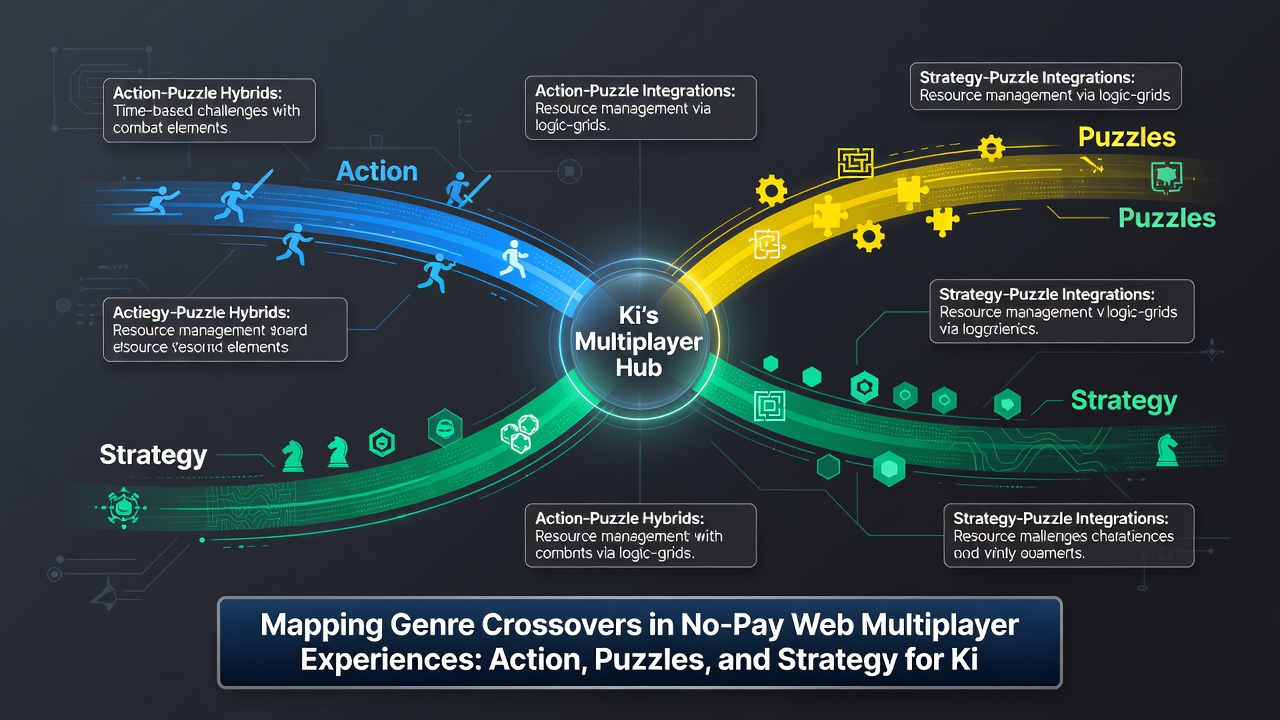
Network infrastructure improvements have reduced latency issues that previously disrupted synchronized strategy phases, while puzzle difficulty scaling now adjusts dynamically according to group success rates rather than individual performance. Those who monitor usage patterns note that titles employing these crossover techniques register higher return rates compared with single-genre counterparts, although exact retention metrics vary by region and access method.
Design Considerations for Age-Appropriate Experiences
Engineers working on these platforms prioritize clear visual cues that distinguish action zones from puzzle interfaces and strategy dashboards, ensuring younger users can identify required inputs without extensive tutorials. Data compiled by university-led research teams indicates that color-coded pathways and icon systems reduce confusion during genre transitions, while audio signals mark shifts between fast-paced segments and reflective phases. Browser constraints such as limited processing power further encourage streamlined implementations that avoid heavy asset loads yet maintain functional multiplayer synchronization.
Examples documented in developer case studies include games where players collect items through action sequences, solve arrangement puzzles to unlock paths, and then vote on collective strategies using accumulated points. These workflows repeat in short cycles that fit within typical school break periods or after-homework windows, supporting repeated engagement without extended commitments.
Conclusion
Genre crossovers in free web multiplayer experiences continue to map onto the developmental needs of children by balancing immediate action feedback with puzzle-based reflection and strategic foresight. As browser capabilities advance, the frequency and complexity of these integrations are expected to expand, supported by ongoing data collection from regulatory bodies and research organizations across multiple regions. The resulting landscape offers structured play environments that adapt across devices while remaining accessible without financial barriers.