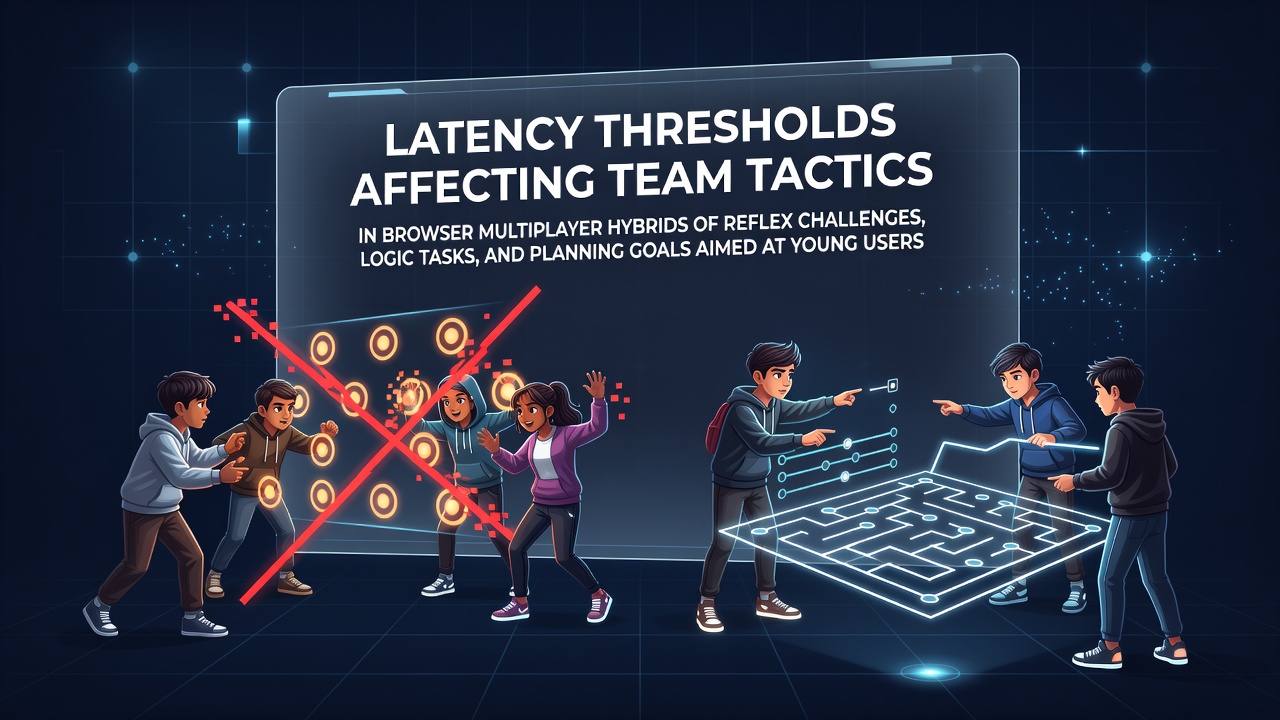
Latency Thresholds and Their Impact on Team Tactics in Browser Multiplayer Hybrids for Young Users
Browser multiplayer hybrids combine reflex challenges with logic tasks and planning goals, creating environments where young users must respond instantly while coordinating long-term strategies across shared sessions, yet network latency often determines whether those tactics succeed or fail.
Latency thresholds refer to the point at which delays between player inputs and server responses begin to disrupt coordinated play, and studies from institutions such as the University of Melbourne have tracked these breakpoints in games aimed at children aged eight to twelve.
Defining Latency Thresholds in Hybrid Browser Games
Network delays in browser-based titles typically range from twenty to one hundred fifty milliseconds before noticeable effects emerge, and data collected through July 2026 shows that thresholds around eighty milliseconds mark the first consistent interference with reflex sequences while higher values begin to fracture planning layers that depend on synchronized team timing.
Reflex challenges require sub-fifty-millisecond responsiveness for actions such as quick dodges or timed clicks, whereas logic tasks involve pattern recognition that tolerates slightly longer pauses, and planning goals rely on shared visibility of resource states that degrade once delays exceed one hundred milliseconds.
How Delays Alter Reflex and Logic Integration
Young players often attempt to compensate for lag by shifting from reactive moves to predictive positioning, yet this adjustment works only when latency remains below the eighty-millisecond mark identified in multiple platform analyses, and beyond that point teams lose the ability to blend instantaneous responses with logical deductions in the same turn cycle.
One research group monitoring European school networks found that groups playing hybrid titles adjusted their communication patterns once delays crossed sixty-five milliseconds, favoring pre-planned signals over real-time calls because voice or chat feedback arrived too late to influence ongoing reflex sequences.
Effects on Planning Goals and Team Coordination
Planning layers suffer when latency prevents simultaneous updates to shared maps or inventories, forcing players to operate from outdated information that leads to misallocated resources or mistimed joint attacks, and figures from the Australian Communications and Media Authority indicate that sessions exceeding one hundred twenty milliseconds show a thirty-five percent drop in successful collaborative objectives.
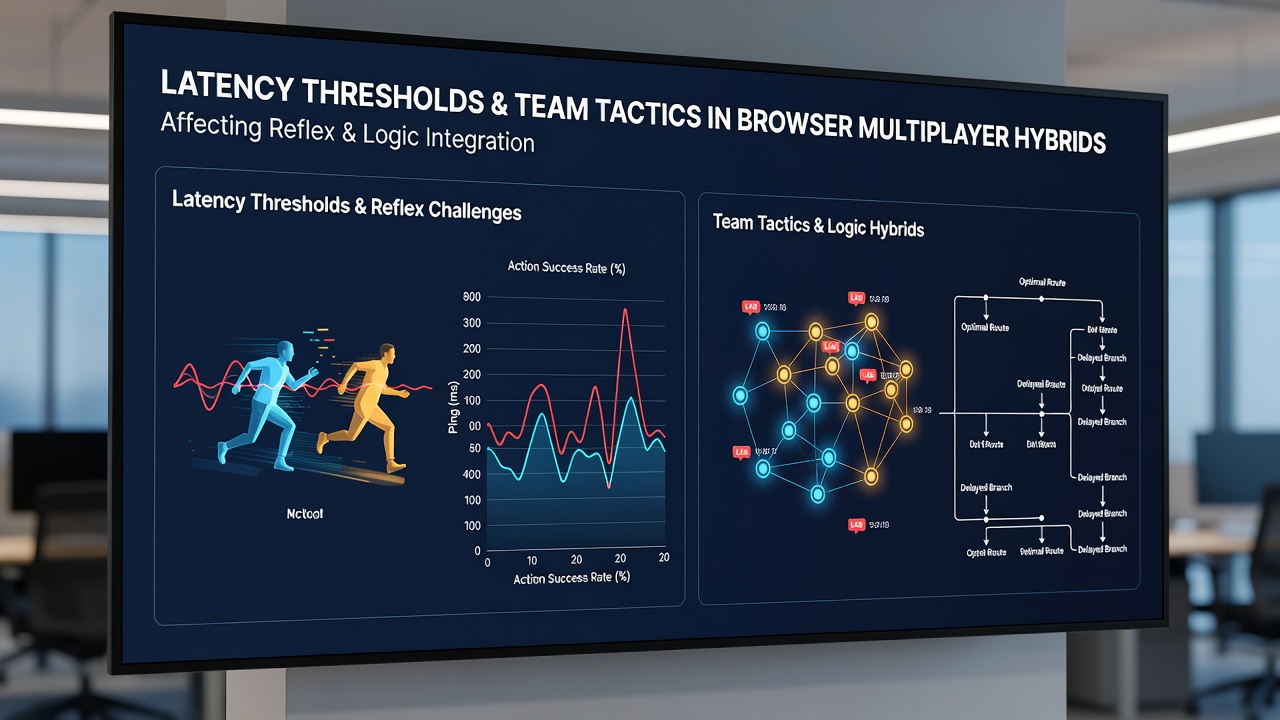
Teams that recognize these constraints early often adopt staggered decision cycles where one subgroup handles immediate reflex demands while another manages slower planning updates, and this division of labor maintains overall performance until latency reaches one hundred forty milliseconds.
Observed Patterns Across Different Regions and Platforms
Regional network infrastructure influences how quickly latency thresholds are reached, with urban fiber connections rarely exceeding forty milliseconds while rural wireless links frequently approach one hundred milliseconds during peak hours, and researchers tracking these differences note that young users in variable-connection areas develop more conservative tactics that prioritize logic verification over reflex execution.
Platform operators have begun implementing client-side prediction systems that mask delays up to ninety milliseconds, allowing hybrid mechanics to remain playable longer, yet these systems introduce occasional desynchronization when actual server states diverge from predicted ones during complex planning phases.
Conclusion
Latency thresholds continue to shape how young players combine reflex actions, logic puzzles, and strategic planning in browser multiplayer hybrids, and ongoing measurements through 2026 confirm that thresholds near eighty and one hundred twenty milliseconds represent critical transition points where team tactics must adapt or risk failure, while regional infrastructure and client-side mitigations determine how often those adaptations succeed.