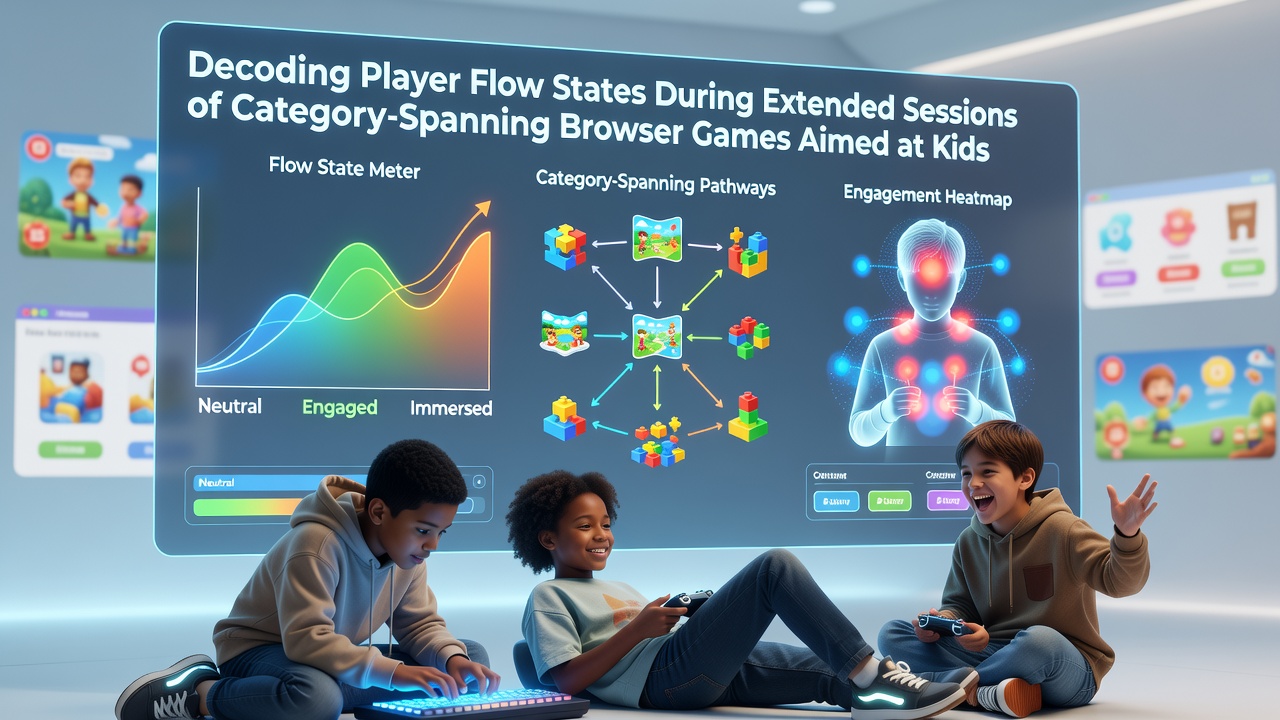
Decoding Player Flow States During Extended Sessions of Category-Spanning Browser Games Aimed at Kids
Flow states describe periods of deep concentration where players lose track of time while balancing challenge with skill level, and researchers have tracked these experiences in children navigating free browser games that combine action sequences with puzzle elements and strategic planning. Data from multiple studies indicate that kids often enter flow during sessions lasting thirty minutes or more when game mechanics shift between quick reflexes and longer-term decisions without requiring downloads or installations.
Core Elements of Flow in Blended Browser Titles
Observers note that flow emerges when immediate feedback from action phases aligns with opportunities for tactical adjustments in puzzle layers, and this alignment holds particular relevance for multiplayer formats where young users coordinate across shared sessions. Studies show heart rate variability and self-reported engagement metrics rise together during these transitions, with children maintaining focus as long as the game adjusts difficulty dynamically across genres.
Category-spanning designs encourage sustained attention because players must switch mental modes rapidly, yet the structure prevents overload when visual cues and control schemes remain consistent. Research indicates that platforms hosting these experiences record average session lengths extending past forty-five minutes for users aged eight to twelve, particularly when resource planning integrates with reflex challenges in group settings.
Session Patterns Observed in Extended Play
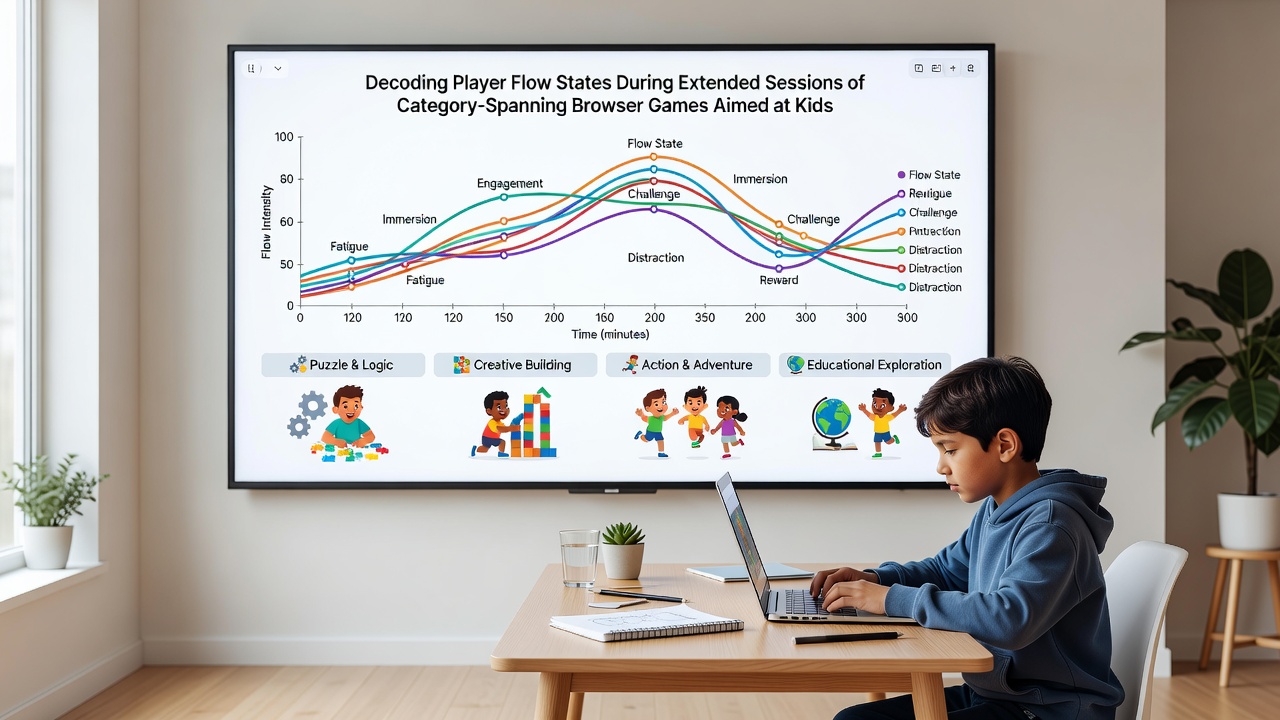
Tracking data collected through August 2026 reveals distinct phases where initial action-driven segments draw players in quickly, followed by puzzle-solving intervals that deepen immersion before strategy layers lock in longer commitment. One analysis of thousands of browser-based multiplayer interactions found that flow interruptions occur most often at abrupt genre shifts lacking clear visual signaling, whereas smooth handoffs between mechanics correlate with continued play.
Children demonstrate adaptive responses by anticipating upcoming challenges based on prior patterns, and this anticipation sustains the balance between skill and demand that defines flow. Metrics from platform logs show reduced drop-off rates when sessions incorporate collaborative elements, allowing peers to contribute to shared goals across action, logic, and planning components.
Influences on Maintaining Flow Across Genres
Latency below fifty milliseconds supports uninterrupted coordination in team-based hybrids, according to performance measurements gathered from North American server networks, while higher delays prompt players to adjust tactics toward more deliberate planning phases. Color-coded interface elements and filter systems further guide discovery, helping young audiences locate experiences that match their current skill thresholds and thereby extend flow periods.
Decision trees mapped in observational research illustrate how kids sequence moves between reflex responses and resource allocation, creating personal pathways that reinforce engagement. Data collected across European and Australian cohorts indicate similar patterns, with session duration increasing when players can revisit earlier sections without losing progress in the overarching strategy framework.
Measurement Approaches and Recent Findings
Researchers apply validated scales adapted from flow theory alongside behavioral logs to quantify immersion during category-spanning play, and these combined methods capture both subjective absorption and objective continuity. A 2026 report compiled by the National Institutes of Health highlighted elevated flow indicators in children using browser platforms that blend instant responses with tactical layers over extended intervals.
Platform categorization systems influence exploration routes, directing users toward hybrid titles that sustain attention through varied pacing. Figures from industry monitoring groups reveal that titles supporting seamless mode transitions retain higher percentages of school-aged participants across multiple logins compared with single-genre alternatives.
Design Factors Supporting Sustained Engagement
Consistent control mappings across action, puzzle, and strategy segments reduce cognitive load during shifts, allowing flow to persist without external interruptions. Observers have documented cases where integrated audio cues and progress indicators help children maintain orientation, particularly in group environments where communication supplements on-screen information.
Adaptive difficulty algorithms that respond to individual performance data further stabilize the challenge-skill balance, and evidence from longitudinal tracking shows these adjustments correlate with longer cumulative playtime in free web-based multiplayer spaces. Players often discover optimal entry points through trial sequences that reward both quick decisions and forward planning.
Conclusion
Flow states in category-spanning browser games for children arise from the interplay of immediate feedback, mode transitions, and collaborative opportunities that keep challenge aligned with developing skills. Session data through August 2026 demonstrate measurable patterns of immersion when mechanics from multiple genres integrate without friction, supported by interface features and low-latency infrastructure. Continued analysis of decision sequences and retention metrics provides clearer insight into how these experiences structure attention across extended periods.