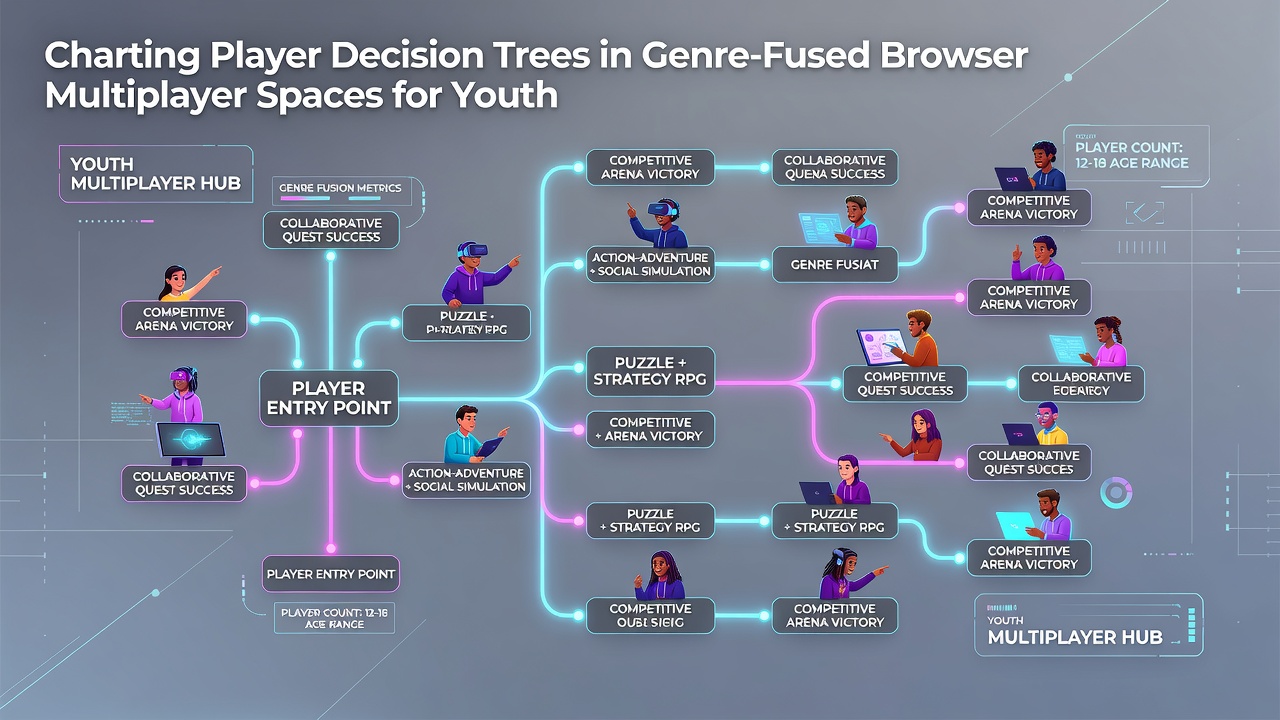
Charting Player Decision Trees in Genre-Fused Browser Multiplayer Spaces for Youth
Browser-based multiplayer environments that blend action sequences with puzzle elements and strategic planning continue to attract young participants, and researchers have begun mapping the decision pathways these users follow during extended play sessions. Data from multiple studies released through mid-2026 shows consistent patterns where children aged eight to fourteen navigate branching choices that require quick reflexes alongside longer-term tactical considerations. Observers note that these fused genres create layered decision trees, with each branch representing immediate responses that feed into broader strategic outcomes.
Understanding Decision Trees in Mixed-Genre Play
Decision trees in this context function as visual models that trace every possible move a player might select at critical moments, and analysts track how those choices diverge when action timing intersects with puzzle resolution or resource management. Studies conducted by university teams in North America and Europe indicate that youth participants often revisit earlier branches after observing group outcomes, which allows them to adjust subsequent strategies without restarting entire sessions. This iterative process becomes visible in log files collected from no-download platforms, where timestamps record the shift from reflexive clicks to deliberate planning sequences.
Data Collection Methods Used by Analysts
Researchers gather information through anonymized session recordings that capture mouse movements, chat interactions, and completion rates across different genre combinations, while government agencies in Canada and Australia have published guidelines for ethical data handling in youth gaming research. One recent report from June 2026 highlighted how decision-tree mapping reveals retention differences when action phases precede puzzle layers versus the reverse order. Teams apply clustering algorithms to group similar pathways, revealing that certain branches correlate with higher repeat engagement among younger cohorts.
Genre Fusion Patterns Observed in Browser Spaces
Platforms that combine real-time action with turn-based strategy elements create environments where players must decide whether to prioritize speed or accuracy at each junction, and industry reports from the Entertainment Software Association document rising participation numbers in these hybrid formats throughout 2025 and into 2026. Those who've examined session data find that children frequently experiment with hybrid approaches, testing whether rapid action clears obstacles faster than methodical puzzle solving before committing to a dominant path. Such experimentation produces dense decision trees that analysts prune by removing low-frequency branches to focus on common trajectories.
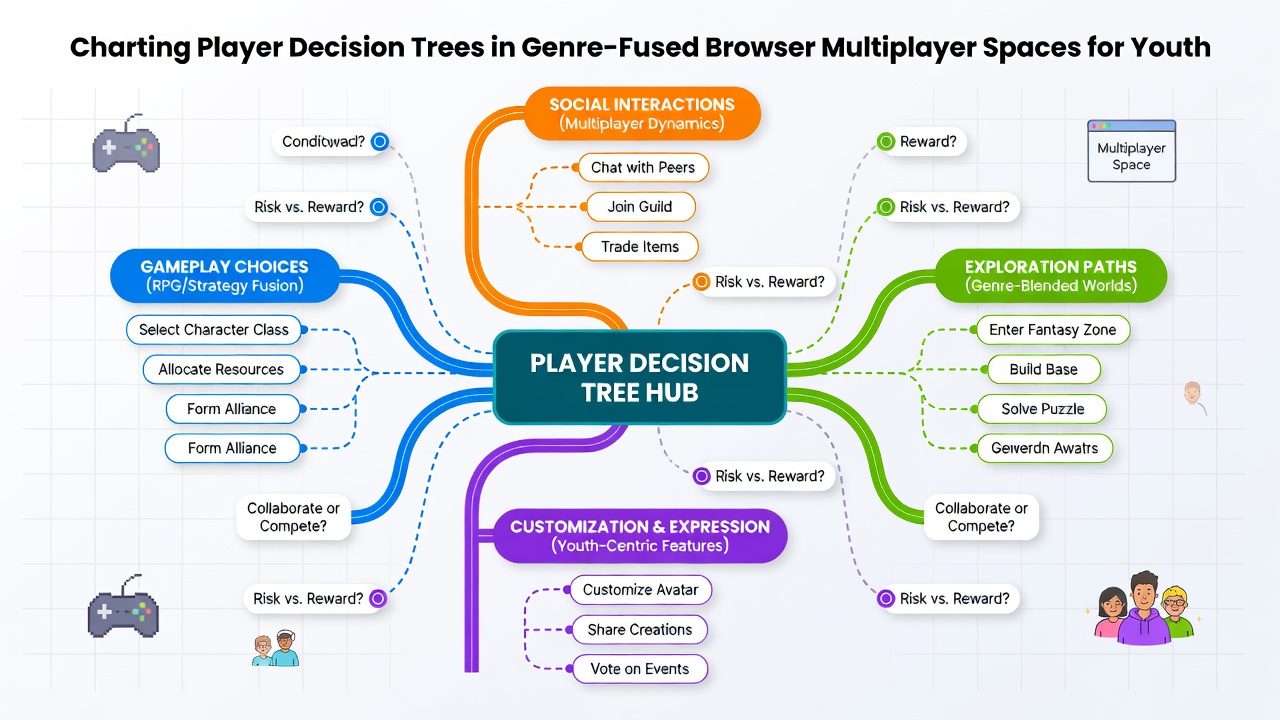
According to figures released by the European Commission's digital youth initiative, approximately 42 percent of surveyed browser game users under age fifteen engage with titles that require simultaneous management of multiple genre demands. These statistics align with patterns identified in academic papers examining cognitive load during play, where decision points that combine timing and planning show elevated neural activation in imaging studies. Analysts therefore construct separate sub-trees for each genre intersection to isolate variables that influence final outcomes.
Applications for Educational and Developmental Tracking
Educators and developmental specialists have started incorporating decision-tree visualizations into assessments of problem-solving growth, since the branching structures make visible how young players adapt strategies after group feedback. Data shared at international conferences in early 2026 demonstrated that repeated exposure to fused-genre scenarios correlates with measurable improvements in flexible thinking metrics across several cohorts. Platforms hosting these experiences often provide optional analytics dashboards that display simplified tree diagrams to parents, allowing them to review progression without accessing raw logs.
Regional Variations in Platform Adoption
North American servers report higher volumes of action-dominant decision paths, whereas European and Asian instances show greater emphasis on collaborative puzzle branches according to aggregated telemetry. Regulatory bodies such as Australia's eSafety Commissioner have issued resources that help developers present these analytics in age-appropriate formats, and similar materials appear in Canadian digital literacy programs. Such regional differences inform how decision-tree models get calibrated when researchers compare cross-border datasets.
Future Directions for Mapping Techniques
Advances in machine-learning tools now permit real-time updating of decision trees as new session data arrives, which reduces the lag between observation and model refinement. Research institutions continue to test predictive accuracy by comparing forecasted branches against actual player behavior recorded weeks later. These iterative refinements help identify which genre-fusion points produce the most complex trees and therefore warrant additional study.
Conclusion
Charting player decision trees within genre-fused browser multiplayer environments supplies concrete frameworks for understanding how youth navigate combined action, puzzle, and strategy demands. Continued collection of session data through 2026 and beyond will refine these models, while international collaboration among academic, industry, and regulatory sources ensures consistent standards for analysis and presentation. The resulting maps offer structured insight into pathways that recur across thousands of individual play sessions.